


An estimate accurate in September can still bleed money by January. That’s not a bad guess or a careless quantity surveyor. It happens when an estimate freezes the moment it’s submitted, while the project keeps moving through a Canadian winter. Construction estimating software Canada contractors rely on needs to do more than produce a clean BOQ at bid time. It needs to stay connected to budget, procurement, and cost actuals all the way through to completion. This post explains exactly where that margin disappears, and what a live-linked workflow looks like.
Why Estimating Accuracy Looks Different in Canada
Estimating in Canada isn’t the same as estimating in a stable, mild market. Long winters, freeze-thaw conditions, shorter daylight hours, wide regional cost spreads, and material volatility all give a Canadian estimate a shorter shelf life than contractors expect.
The numbers confirm this. Non-residential building construction costs rose 4.2% across Canada’s major metros in Q3 2025. However, the regional spread is what catches estimators out: in a single quarter, residential costs jumped 3.4% in Quebec while Toronto saw just 0.2%. Structural steel and metal fabrications led non-residential increases at up to 3.0%, pressure that Statistics Canada attributes directly to US tariffs and Canada’s counter-tariffs. A rate that held last quarter in one city can already be stale in another.
For contractors using IntoAEC’s BOQ software, these fluctuations are visible and trackable. Without a live connection from estimate to budget, they’re invisible until month-end.
What Happens When Winter Arrives on a Bid Priced in September
Picture a commercial renovation priced in September. The BOQ is clean, the labour allowance looks reasonable, and the margin looks safe. Then approvals run long, procurement starts late, and exterior work shifts toward winter.
Concrete needs protection, temporary heating costs appear, productivity drops, and the supplier reprices. The estimator’s original BOQ sits in one file while the budget drifts in another. By January, the contractor is asking how a correct estimate lost margin.
In cold-climate construction, time changes the estimate. That’s not an excuse. It’s a workflow problem, and it’s fixable.
Does Winter Construction Really Cost More?
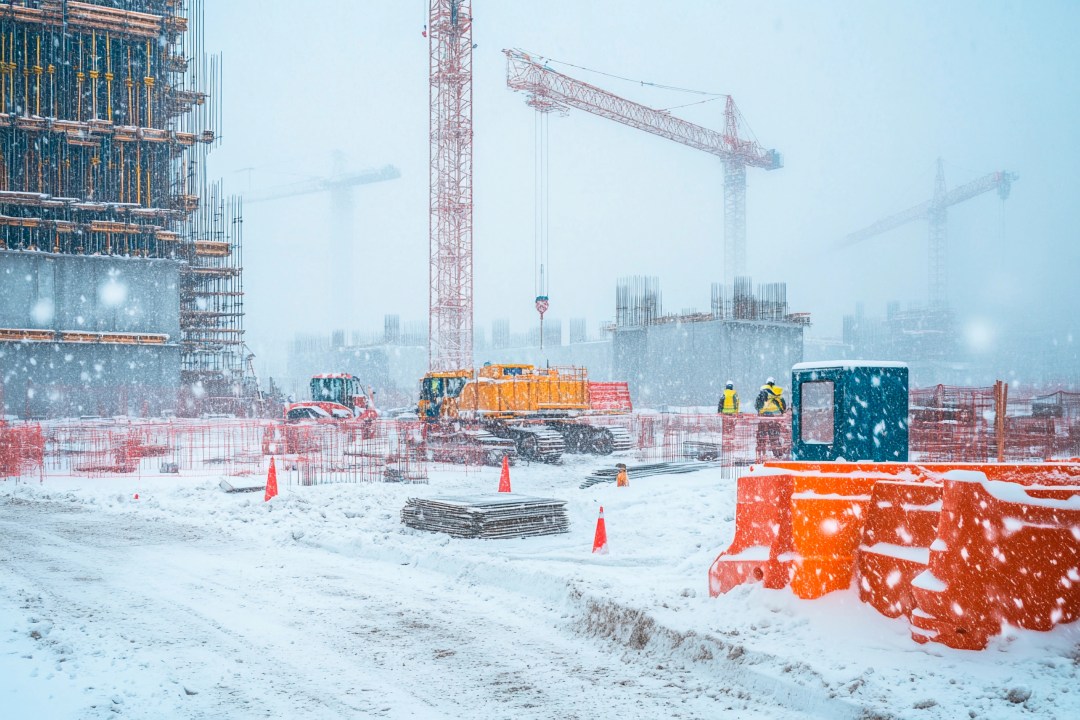
Yes, significantly. Good Canadian contractors build through winter, but every adaptation carries real cost: hoarding and enclosures, temporary heating, specialized concrete mixes, snow clearing, and crews working slower in heavy gear and shorter daylight.
The productivity hit is large. Research on cold-weather work has found average labour productivity losses approaching 50% in severe conditions. Even routine tasks take longer once warm-up breaks, equipment pre-heating, and site clearing are added.
Here’s the trap: a task estimated at 100 labour hours in normal conditions can run well above that in January. Material price changes at least arrive as updated supplier quotes. Labour escalation is invisible until payroll lands, by which point the work is already committed.
IntoAEC’s time tracking module captures work-hour data from the field in real time, so the gap between estimated and actual labour becomes visible before it compounds across a full winter month.
Where the BOQ-to-Budget Gap Opens Up
The core problem is a missing live connection between four views that should always agree: what was estimated (the BOQ), what was planned (the budget), what was committed (procurement), and what was spent (actual cost).
When estimating, project management, procurement, and finance each work from separate files, cost control becomes reactive. The contractor learns the truth only after the money is gone.
A connected workflow lets the team answer the questions that protect margin before purchase orders go out. Is the supplier quote still valid? Which BOQ items are exposed to seasonal price movement? Which activities depend on winter execution? Which items have long lead times and should be bought early to lock price? Which budget lines carry no contingency?
With IntoAEC’s project budgeting module, planned versus actual costs update in real time. The PM sees variance when it opens, not when the invoice arrives.
How Canadian Contractors Can Close the Gap
Closing the BOQ-to-budget gap requires connecting five things that are typically handled separately:
Estimate to BOQ. Every line item in the estimate should map directly into the BOQ without re-keying. Any re-entry is a chance for drift. IntoAEC’s construction estimation and quotes tool pushes estimate data directly into the BOQ, so there’s one version of the truth from day one.
BOQ to procurement. Once quantities are confirmed, procurement should draw from those exact line items. A separate procurement spreadsheet introduces version risk, especially when supplier quotes change between bid and buy. IntoAEC’s procurement module connects BOQ line items to RFQs and purchase orders, so the team buys against the same quantities they estimated.
Procurement to budget. When a PO is raised, the committed cost should update the budget automatically. In Canada, where material costs can shift quarter over quarter, the budget needs to reflect what’s actually been committed, not just what was assumed at bid time.
Budget to actuals. When invoices and site costs land, they should close against the budget line by line. IntoAEC’s bills and expenses module logs costs against project budgets as they occur.
Actuals to the project team. The PM, estimator, and finance lead need to see the same cost reality. A shared dashboard that reflects estimate, committed, and actual in one view means problems surface when they’re still manageable.
What This Looks Like for a Cold-Climate Project
Consider a concrete structure in Alberta. The estimator builds the BOQ in October and assumes normal productivity. However, approvals push the start to December. The structural work now runs through winter.
With a connected platform, the PM can flag the winter risk on specific BOQ lines, check whether the concrete supplier quote is still valid, raise an RFQ for hoarding materials, and see the budget impact before any purchase order is signed. The project doesn’t have to get to invoice day to know it’s in trouble.
Without that connection, each of those signals travels through email or a separate spreadsheet, and the margin gap opens silently.
How IntoAEC Helps Canadian Contractors Protect Margin
The right construction estimating software Canada-wide projects need connects the full chain in one platform: Estimate, BOQ, Budget, Procurement, Project Tasks, Invoices, and Cost Visibility. The estimate doesn’t go static when the job is awarded. When a supplier price changes, the budget reflects it. When procurement slips, the forecast updates. When winter slows the site, the PM sees the variance early, and ownership sees margin risk before month-end.
The estimator, PM, procurement lead, and finance team work from one shared cost reality. For cold-climate projects, where a delayed start can push work into a more expensive season, that early visibility is the difference between a managed risk and a silent loss.
You can explore the full feature set at IntoAEC’s construction management platform.
Ready to Connect Your Estimate to Your Budget?
Canadian contractors working through cold seasons can’t afford a static BOQ sitting in a spreadsheet while the project costs move. The gap between estimate and actual is where margin is lost, and the fix is a live link from estimate to procurement to budget to actuals.
IntoAEC gives your team one connected workflow across estimation, BOQ, procurement, project management, and cost visibility. Book a demo to see exactly how it works for cold-climate projects, and start protecting margin from bid day to final invoice.
Book a Demo or Start Your Free Trial and see how IntoAEC connects the full cost chain on your next Canadian project.

Frequently Asked Questions
Because the BOQ goes static the moment it’s submitted, while prices, labour productivity, and procurement timing keep moving. Without a live link from the estimate to the budget, seasonal cost changes and tariff-driven material volatility hit margin without warning. The right estimating platform must stay connected to actuals, not just produce a snapshot at bid time.
Significantly. Cold-weather productivity losses can approach 50% in severe conditions once slower movement, warm-up breaks, shorter daylight, and site clearing are counted. A task estimated at 100 labour hours under normal conditions can run well above that in January, and that overrun is invisible until payroll lands.
Statistics Canada attributes recent increases in structural steel and metal fabrication costs largely to US tariffs and Canada’s counter-tariffs, alongside longer lead times and skilled-labour shortages. These pressures are regional and division-specific, meaning a rate that held in one province last quarter can already be stale in another.
A BOQ is the itemized list of quantities and materials required to complete a project, typically frozen at bid or design stage. A budget is the live financial plan that tracks what has been committed and spent throughout the project. The gap between the two is where margin is lost when the systems are not connected.
Yes. IntoAEC supports multiple projects with separate budgets, BOQs, and procurement workflows, so regional cost differences can be tracked project by project. The platform also handles multiple tax configurations, which matters for contractors operating across provinces with different tax treatment.